But the recent slowdown hasn’t disrupted the market’s underlying stability. Even as leasing slows, annual absorption of 637,000 units1 signals resilient renter demand supported by stable fundamentals.
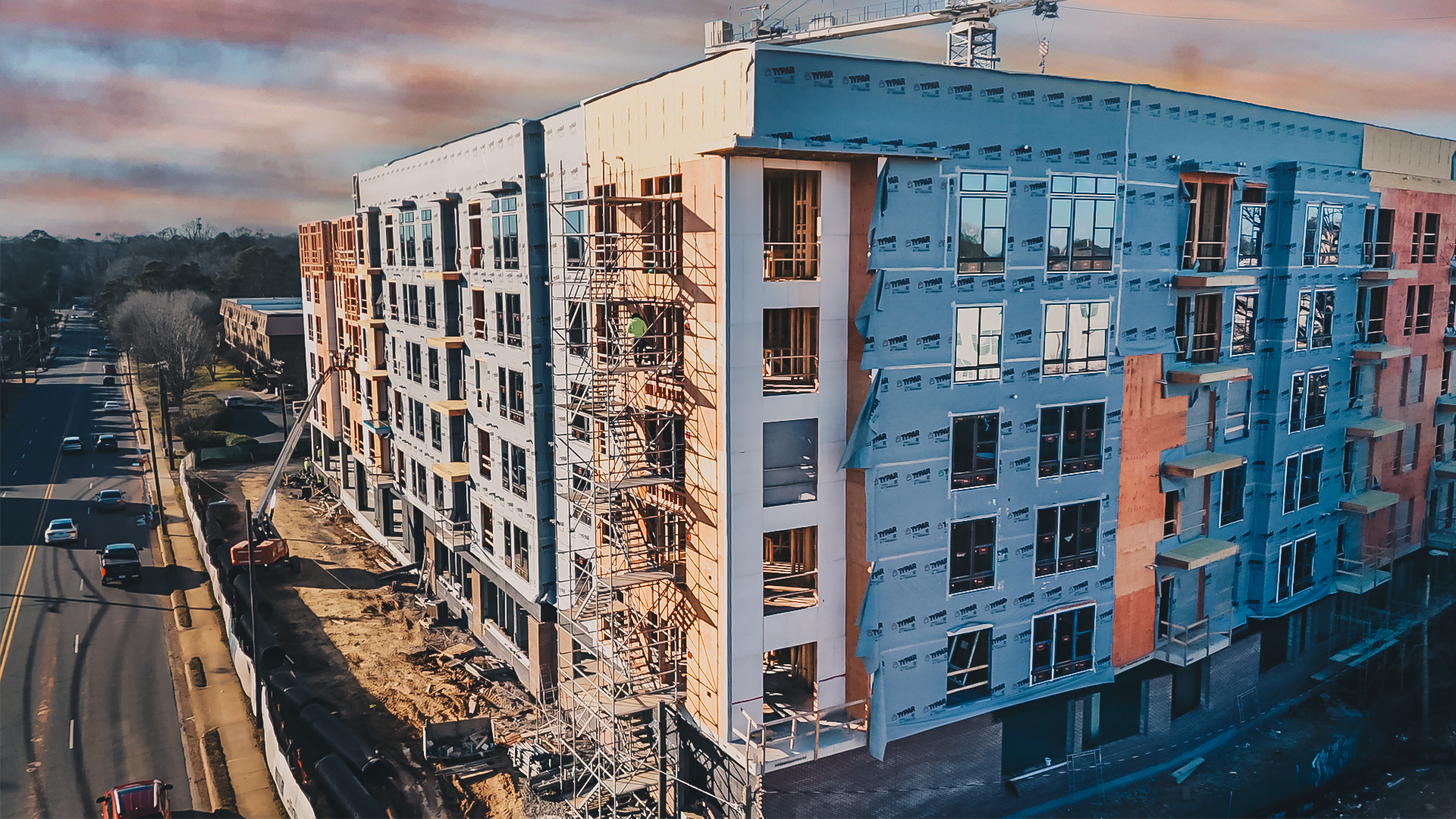
At the same time, construction activity continues to slow. During the same twelve months, 474,800 new units were delivered—down more than 100,000 units from the 586,151 units delivered in 2024.1 Other stages of the pipeline have witnessed a similar slowdown. In the twelve months preceding August 2025:
- Multifamily permits fell to 403,000, down 10.8% from one year ago.2
- New multifamily units under construction declined to 686,000 units, down 20.2% from last year.2
The simultaneous decline in both supply and demand has kept multifamily fundamentals stable. At 95.4%, the Q3 occupancy rate is down 0.3% from Q2, while rents likewise fell 0.3% quarter-over-quarter (and 0.1% year-over-year).1 These small declines suggest that demand remains strong enough to absorb new inventory coming online, supporting steady cash flow and limited downside risk.
Could Activity Rebound?
Market conditions in Q3 reflect the broader macroeconomic slowdown, suggesting that markets with stronger economic tailwinds may be better positioned for a potential rebound.
Data from payroll provider ADP, as reported by The Wall Street Journal, suggest that the labor market is currently struggling. Private-sector employers shed 32,000 jobs in September 2025, with the majority of job losses concentrated among small employers and establishments in the hospitality and tourism sector.3
Workers with jobs are also staying put. The job “quits” rate fell to 1.9% in August 2025,3 showing that employees are hesitant to pursue opportunities elsewhere. A lack of new jobs, coupled with a decline in labor mobility, has impacted leasing and renewal patterns. While new leasing activity is slowing, resident retention is on the rise, suggesting that renters are less inclined to move, whether it be down the street or across the country. As a result, overall occupancy has remained stable, even amid a slowdown in new leasing activity.
Despite ongoing challenges, forecasts for 2026 remain bright. RealPage Analytics expects job growth to reach 0.4% nationwide, with well-above-average job gains predicted especially in Sunbelt states, such as Texas, Florida, and North Carolina.4 This offers upside potential for multifamily investors, like DLP Capital, that are focused on these areas.
DLP Capital’s Outlook
DLP projects that 2026 will mark the beginning of a new compression cycle on valuations and financing costs. We believe that after finding a floor in 2025, the combination of two factors will drive lower cap rates: first, easing monetary policy from the Federal Reserve,5 and second, renewed investor demand chasing accelerating rent growth. A 25–40 bps compression in cap rates is a bullish but reasonable target as the market begins to price in the strong, supply-constrained growth expected in 2027 and 2028.
DLP also expects 2026 to be an inflection point for revenue growth. As the recent supply wave is absorbed, landlords will regain pricing power and burn off historically high concessions. However, we anticipate that NOI growth will lag revenue growth. Stubborn inflation in operating costs will continue to be a headwind. DLP expects to continue realizing out-of-market savings on insurance. After spending 2025 improving operations and investing heavily in our communities, expenses are expected to begin normalizing in 2026.
DLP expects that stronger capital markets and improved property economics will lead to performance improvements for all DLP-sponsored funds. Debt funds, such as the DLP Lending Fund and DLP Preferred Credit Fund, will benefit from improvements in their back-leverage through lower SOFR rates and quicker repayments due to improving capital markets, allowing management to redeploy funds more quickly in service of our mission.
For equity funds, such as the DLP Housing Fund and the DLP Building Communities Fund, performance will be seen through stronger NOI growth, lower financing expense, and decreasing cap rate spreads. Overall, DLP Capital expects that the coming months and years will continue to see DLP-sponsored funds hit their targeted returns.