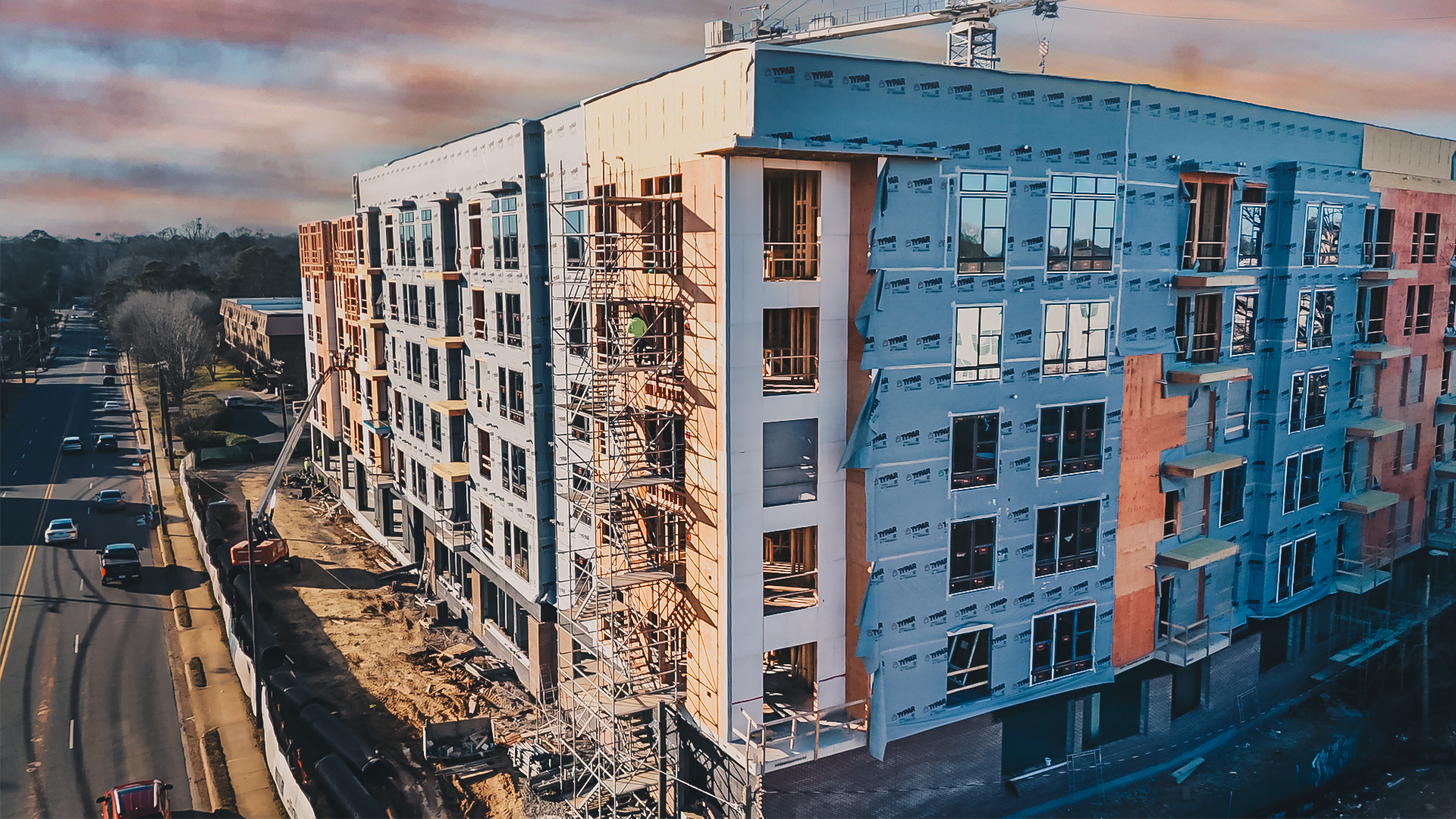
Over the course of nearly thirty years, Jim Boyce has built his career from the ground up, helping deliver more than $1 billion in construction and development projects across a wide range of asset types—from educational and institutional facilities to large-scale mixed-use and multifamily communities.
Today, as President of Development and Construction at DLP Capital, Jim leads teams responsible for delivering complex projects across a diverse and evolving portfolio. His approach is grounded in adaptability, disciplined execution, and a willingness to overcome challenges.
Construction and development play a critical role at DLP, creating communities that serve people not just in the moment, but for the long term. In this conversation, Jim reflects on the experiences that shape how he works today, what success really means, and why, at the end of the day, it always comes back to people.
Q: What originally drew you to this construction industry?
I grew up in construction. Most of my summer jobs through high school and college involved working in construction, doing everything from driving equipment or installing and hanging drywall, to just pushing a broom for $5 an hour.
Q: How has your definition of success evolved over the course of your career?
Anyone early in their career will probably define success by getting to the top, but as you get older—and hopefully a little wiser—it becomes more about who you help to get to the top alongside you.
Q: As President of Development & Construction, how do you define success—beyond delivering projects on time and on budget?
Oddly enough, I’ve rarely defined a project’s success by timelines or budgets. Those are short-term wins, realized only momentarily, and you move on. To me, it is about long-term success—the project is still performing two, five, ten years after its completion.
Q: What differentiates DLP’s development strategy from others in the market today?
What differentiates DLP is our ability to stay opportunistic and figure it the heck out. We are not locked into specific projects or product types. That variability allows our teams to have traditional multifamily, single-family, RV parks, destination resorts, land sales, and several other real estate market sectors actively in development and construction.
Q: How do you approach risk management in today’s construction environment?
We stay adaptable, with multiple phasing opportunities and exit scenarios. There will always be unknowns that arise. The key is having a plan in place for “what if” scenarios. That preparation allows us to pivot without losing momentum.
Q: What macro trend in development or construction do you believe leaders must be prepared for in the coming years?
I think trends come and go. Leaders, not just in development and construction but all markets, must focus on the fundamentals. No matter the market, it’s important to remember that this industry always boils down to people: your teams, your residents, and the communities you are shaping—now and for future generations.
Q: Where do you see the biggest opportunity to elevate DLP’s development and construction strategy?
Right now, we’re focused on exploring opportunities that utilize park models and manufactured housing as a solution to deliver more attainable housing opportunities in regions where traditional development may have otherwise been too costly to bring to market. With our in-house dealership, Dream Camp Homes, we can source homes directly from the manufacturers, further reducing costs and availability constraints.
Q: DLP talks about building Thriving Communities, but what do you think transforms a project into a Thriving Community?
Thriving Communities are transformed by dedicated teams, initiatives, and the connection they support. Any building can provide shelter, and even security, but the feeling that you get from knowing your neighbors—that really sets a Thriving Community apart. When thoughtfully designed and delivered, our Dream Live Prosper Communities (DLPC) teams step up every time to bring that vision to life.
Q: When you visit a completed development and see residents move in, what goes through your mind?
One of the big reasons I got into this industry was how much I enjoy working on a tangible project that impacts real people’s lives. Walking projects that I have been part of, knowing the hard work contributed by hundreds of people to reach our shared mission of building Thriving Communities together, is incredibly rewarding. In my own small way, I get to help make the world a little better—one project, property, and community at a time.
Q: How do you ensure DLP’s values are reflected not just in the office, but on job sites and with partners?
I think that everyone has their own leadership style. What works for me may not work for everyone else. My idea of a leader demonstrates those values every day. Your team sees that you are willing to step in, go the extra mile, take ownership, and do whatever it takes to help move things forward alongside them. That level of dedication and genuine commitment helps to grow our company culture across all of our teams at DLP.
Q: How do you protect time and energy for what matters most outside of work?
A lot of people use the term “work-life balance,” but I don’t think they fully consider what that means in today’s reality. It’s more about integration than balance. Work doesn’t stop—but neither does your life. You have to manage a “work-life integration.” If that means stepping away for a baseball game or other family time, you make it up elsewhere. It’s about being present where it matters most.
Q: Thinking back on your career, what is the most formative piece of feedback you have ever received?
About 10 years into my career, a senior leader I worked with very closely told me, "It's okay to do the right thing,” and that has really stuck with me. This industry can push you to cut corners to get ahead, but that is not how long-term success is built.
Q: What do you hope your legacy at DLP will be?
That I always stood and fought for what I believed in. I don’t mind being wrong. Anyone who knows me, works with me, will tell you that I refuse to be another bobble head who just agrees to keep the peace. If you’re in the room, you should care enough to speak up and make an impact.