Diversify with private credit and equity real estate investment funds that make non-concessionary impact investments to expand access for America’s working families to affordable, safe communities.
Senior Secured Mortgage Fund that makes private credit investments to experienced real estate sponsors. Targets monthly passive income and annual returns of up to 10% for accredited investors.
Private Real Estate Investment Fund that invests in income-producing, attainable rental communities. Targets monthly passive income and annual returns of up to 12% for accredited investors.
Private Preferred Credit Fund that provides mezzanine loans and other subordinate financing to developers focused on attainable rental housing. Targets monthly passive income and annual returns of up to 11% for accredited investors.
Private Real Estate Investment Fund that invests in all stages of development to build, improve, and manage attainable rental housing. Targets monthly passive income and annual returns of up to 16% for accredited investors.
Private Real Estate Investment Fund focused on manufactured housing and RV-zoned communities, including vacation rental resorts and hospitality-integrated developments. Invests in the sale of manufactured homes and park models paired with land-lease structures. Targets long-term equity growth with a preferred annual return of approximately 10% for accredited investors.
Structured Private Note Offering providing priority credit exposure to DLP-managed real estate assets through secured Series B Notes. Designed to deliver fixed, predictable income with an 8% annual interest rate, monthly reporting, and a 5-year term for disciplined accredited investors.
See how DLP Capital’s lending fuels real estate projects that transform communities. These stories highlight the creativity, determination, and results of the talented sponsors we work with.
Explore a selection of our recent transactions across lending, acquisitions, and investments — demonstrating our commitment to delivering momentum, certainty, and impact for real estate projects nationwide.
Great outcomes come from consistent progress, not occasional sprints. That's the heart of our Twenty Mile March core value: setting clear goals, pursuing them with unwavering focus, and course correcting as needed. The Twenty brings that same discipline to your learning. Explore our latest webinars, articles, podcast episodes, and more.
Read the latest DLP Capital quarterly report for the most recent performance of DLP Capital-sponsored funds, updates on current investments within the funds, stories of our impact in action, company insights, and more.
CEO Don Wenner has built a life—and a company—dedicated to transforming lives through access to safe and attainable housing. Today, DLP Capital is creating solutions to the affordable housing crisis, redefining community, and helping investors discover success with significance.
DLP Capital’s purpose-driven, non-concessionary impact investments create housing, jobs, connection, and opportunity for families across America. Discover more about how DLP invests with purpose.
Meet the visionary leaders committed to executing DLP’s vision of transforming the lives of both residents and investors through the building of Thriving Communities.
Stay inspired by the latest updates from DLP Capital. Explore how we’re driving meaningful change, earning recognition, and celebrating milestones as we continue building thriving communities across America.
At DLP Capital, work is more than a job—it’s a mission. Join a team dedicated to solving America’s housing crisis, building thriving communities, and creating opportunities for families across the country.
Our mission starts with connection. Reach out to our team or visit one of our locations to learn more about how DLP Capital is creating impact where it matters most.
What to Invest 100k in for a Diversified Portfolio in 2026
When investing, you don’t want to put all your eggs in one basket. So, what investments can help you spread out your exposure?
April 17, 2026
Investment Insights
Crossing the six-figure asset barrier is a significant milestone for American savers. It’s also fairly rare.
Data from the Federal Reserve’s Survey of Consumer Finances (SCF) as reported by USAFacts shows that roughly one in four Americans had more than $100,000 saved up for retirement.1
Having $100,000 in cash to deploy was even rarer: just 12% of households across all age groups had a six-figure checking or savings account balance.1
This proportion is roughly on par with the 12.6% of U.S. individuals and 18.5% of American households who qualify as accredited investors.2 You can meet the U.S. Security and Exchange Commission's (SEC’s) definition of this term under Regulation D if you check one or both financial criteria.3
First, you are an accredited investor if you have an individual or household net worth of $1 million or more, excluding the value of your primary residence. You also qualify as an accredited investor if you earned $200,000 or more ($300,000 or more in combination with your spouse) in the last two consecutive years, and reasonably expect to do the same this year.3
What if you’re an accredited investor with $100,000 to invest?
At this level, you can allocate to a wide range of investments. First, as an accredited investor, you have the opportunity to invest in asset classes not available to non-accredited investors—including alternatives such as private real estate, private equity, and more. In addition, $100,000 is enough to meet the minimum investment requirements for comparatively more diversified investment solutions, such as some private real estate funds. Below, we take a closer look at some of these potential opportunities.
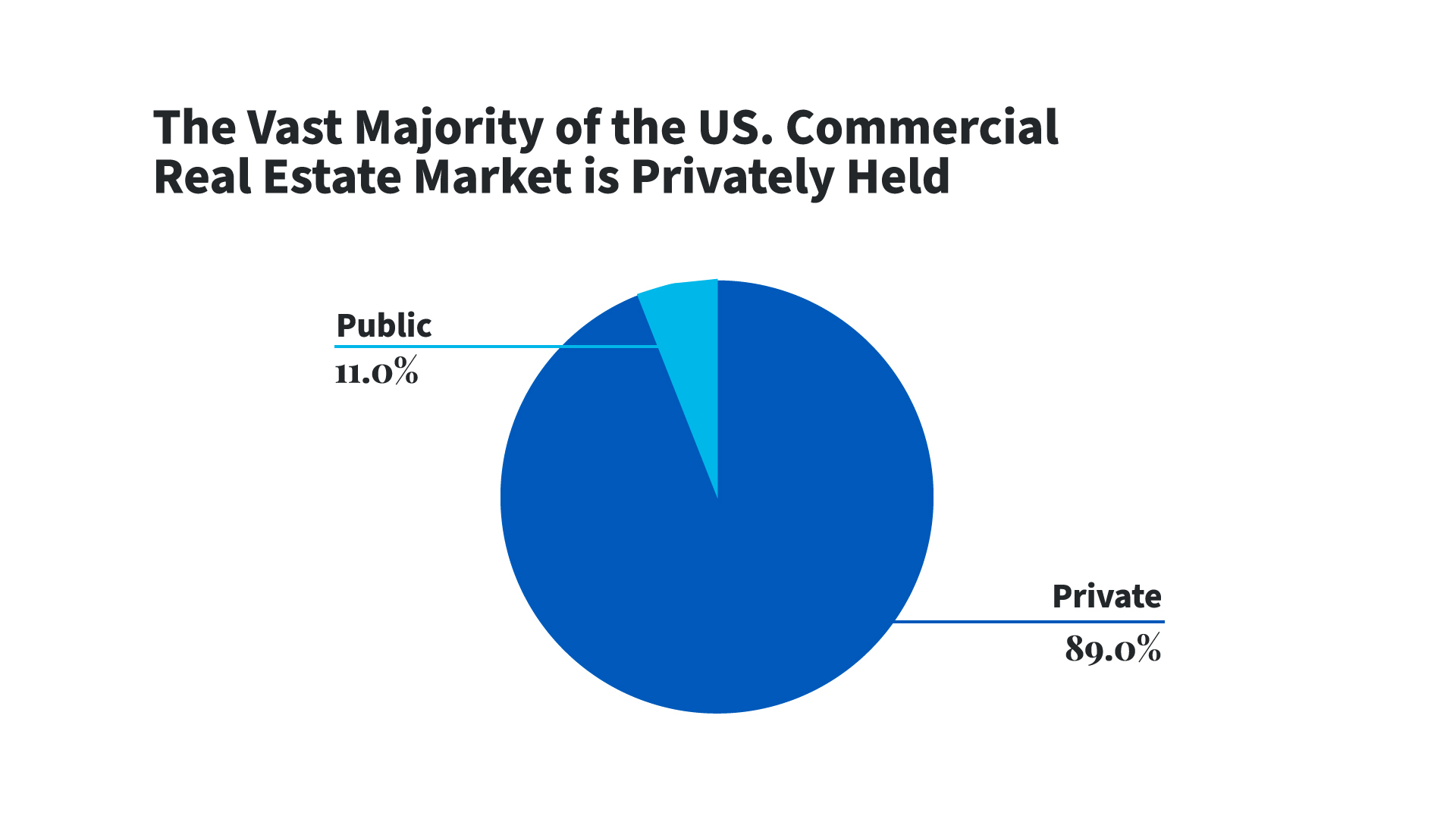
But the public market is just a small fraction of the $24 trillion American real estate market. In fact, 94% of all commercial real estate in the United States by value is privately-owned—whether held in private real estate funds or owned outright by institutions, companies, or individuals.5
That means that many specialized real estate assets—like attainable workforce housing in Sunbelt states, real estate-backed loans to commercial sponsors, or preferred equity investments in ground-up multifamily projects—may be entirely private.
In other words, allocating only to public REITs means you risk concentrating your real estate exposure to a small subset of the investable universe. For a truly diversified portfolio, you may want to consider adding private real estate to your portfolio. Doing so can potentially help you diversify away from publicly-traded REITs, stocks, and bonds—all at the same time.
Which private real estate investments are most diversified?
Of course, there are a couple of private real estate investments that you can make with $100,000.
Real estate syndications, which allow you to invest on a deal-by-deal basis, typically impose minimums beginning at $10,000 or more. On the other hand, real estate funds—which allow you to gain exposure to a large number of deals simultaneously—often feature minimums ranging from $50,000 to $250,000 or more.6
Because your six-figure investment means you meet the minimums for both syndications and funds, the question becomes: which is more diversified?
Here, the answer is clear: private real estate funds are usually more diversified than syndications. That’s because funds provide investors with exposure to a basket of deals. This spreads risk across multiple assets, meaning that you may remain protected even if several individual deals underperform.
Real estate syndications, by contrast, are most often concentrated in a single deal. This relative lack of diversification means that performance of your investment hinges upon the success or failure of one deal and one deal only.
Ultimately, having $100,000 to invest places you in a select group with access to opportunities beyond the public markets. For accredited investors seeking meaningful diversification, the vast private real estate market offers a compelling frontier that public REITs alone cannot provide. With a six-figure sum, you can move beyond single-deal investments and access professionally-managed private real estate funds that allow you to efficiently deploy your capital across a broad portfolio of assets in a single, strategic move.
A single investment in a DLP Capital-sponsored fund can spread your risk across dozens of multifamily assets and potentially help you achieve a diversified portfolio.
There’s no single “best” investment to invest $100,000 in. What’s right for you will depend on your risk tolerance, liquidity needs, time horizon, and income requirements. For example, if you’re interested in passive real estate investing, want the potential to earn passive income, and want to gain exposure to many properties at once, you can consider investing in a private real estate fund.
Our website uses cookies to enhance your experience, analyze website traffic, and deliver content tailored to your interests. By clicking "Accept", you consent to our use of cookies.