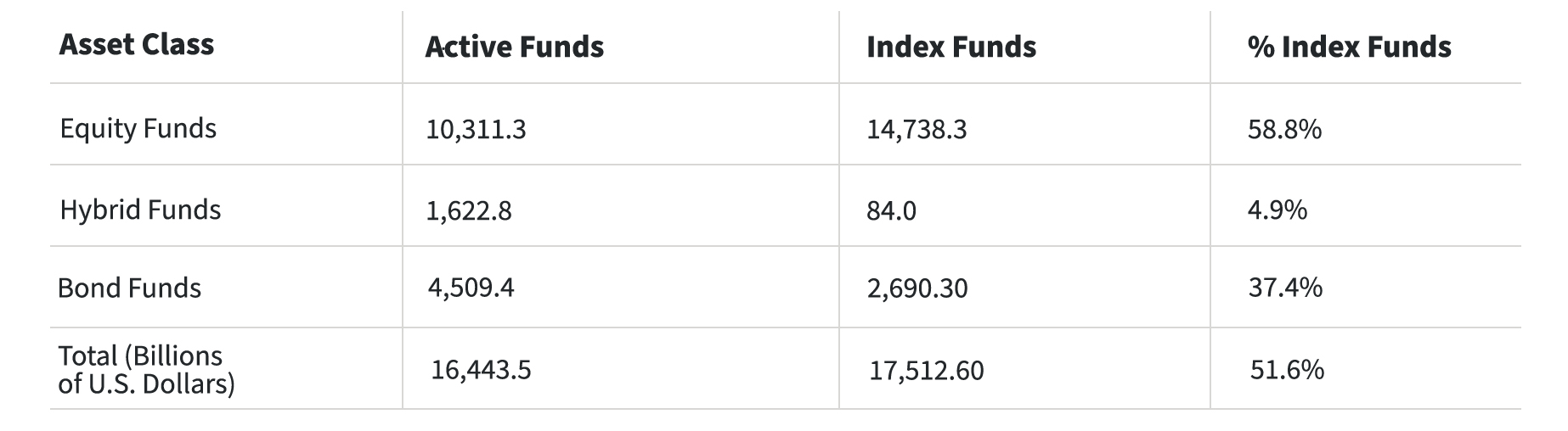
Index funds offer broad market exposure and liquidity, but they also have limits. Returns are tied to market performance, and investors cannot outperform the benchmark. For accredited investors seeking portfolio diversification, passive income, and higher potential returns, private real estate funds like those from DLP Capital could provide compelling advantages.
Comparing private real estate funds and index funds
Like index funds—which hold hundreds or thousands of positions at once, depending on the index they track—private real estate funds also allocate to a large number of equity or debt deals simultaneously. This means that private funds, such as index funds, can enable you to gain diversified exposure to an underlying asset class through a single investment.
Both index funds and real estate funds are overseen by professional investment teams, which can provide investors with potential passive income in the form of dividends or distributions.
That said, there are important differences that highlight why private real estate may offer unique value. Unlike index funds, most private real estate funds are actively managed—the fund’s investment team will seek to outperform, rather than match, the return of a benchmark index.
Liquidity is another factor. While index mutual funds and index exchange-traded funds (ETFs) offer daily and continuous liquidity, private real estate funds may offer monthly, quarterly, or annual liquidity. This relative illiquidity means that private real estate funds typically target higher returns, a phenomenon known as liquidity (or sometimes illiquidity) premium.4
Leverage can be used to amplify growth potential. For example, real estate credit funds may employ a form of leverage called back-leverage, in which the fund finances a portion of loans extended to borrowers using warehouse lines of credit. The use of leverage enables private real estate funds, such as those offered by DLP Capital, to potentially produce higher returns without requiring investors to manage financing themselves.
Sponsors can gain access to exclusive opportunities through private real estate funds that are otherwise unavailable in public markets. While ordinary investors can purchase index funds, many private real estate funds are typically only available to accredited investors. To become an accredited investor, you’ll need to meet the definition set by the U.S. Securities and Exchange Commission (SEC), which requires you to fulfill one of the following financial criteria:
- The net worth test: Have a net worth of $1 million or more, either individually or in combination with your spouse.5
- The income test: Have earned a gross income of at least $200,000 ($300,000 in combination with your spouse) in each of the preceding two years, and reasonably expect to do the same in the current year.5
Which investment is right for you?
You do not have to choose between index funds and real estate funds. Combining index and private real estate funds can help capture equity growth and reduce portfolio volatility. By blending index funds with DLP Capital’s sponsored real estate funds, investors can build a potentially more resilient, income-generating portfolio.
Ultimately, investing in private real estate sponsored funds like those offered by DLP Capital could allow accredited investors to gain:
- Access to Exclusive Opportunities: Private real estate funds are typically only available to accredited investors. If you’re eligible, you could benefit from including this alternative asset class in your portfolio.
- Passive Exposure to Real Estate: Private real estate funds are managed by professional fund managers, allowing you to gain exposure to real estate without the day-to-day hassles of dealmaking or property management.
- Portfolio Diversification: Private real estate funds invest in dozens of deals at once, allowing you to diversify your real estate exposure through a single investment.
- Potential for Stronger Returns: Private real estate funds are less liquid than index funds, which may offer the potential for higher returns.
- Alignment with Investor Goals: DLP Capital funds are structured to provide consistent distributions while targeting long-term growth.
Index funds are convenient and liquid, but for accredited investors seeking diversification, passive income, and long-term growth, private real estate funds from DLP Capital provide an opportunity to access high-quality real estate and credit investments that the public markets cannot replicate.