


Q2 by the Numbers
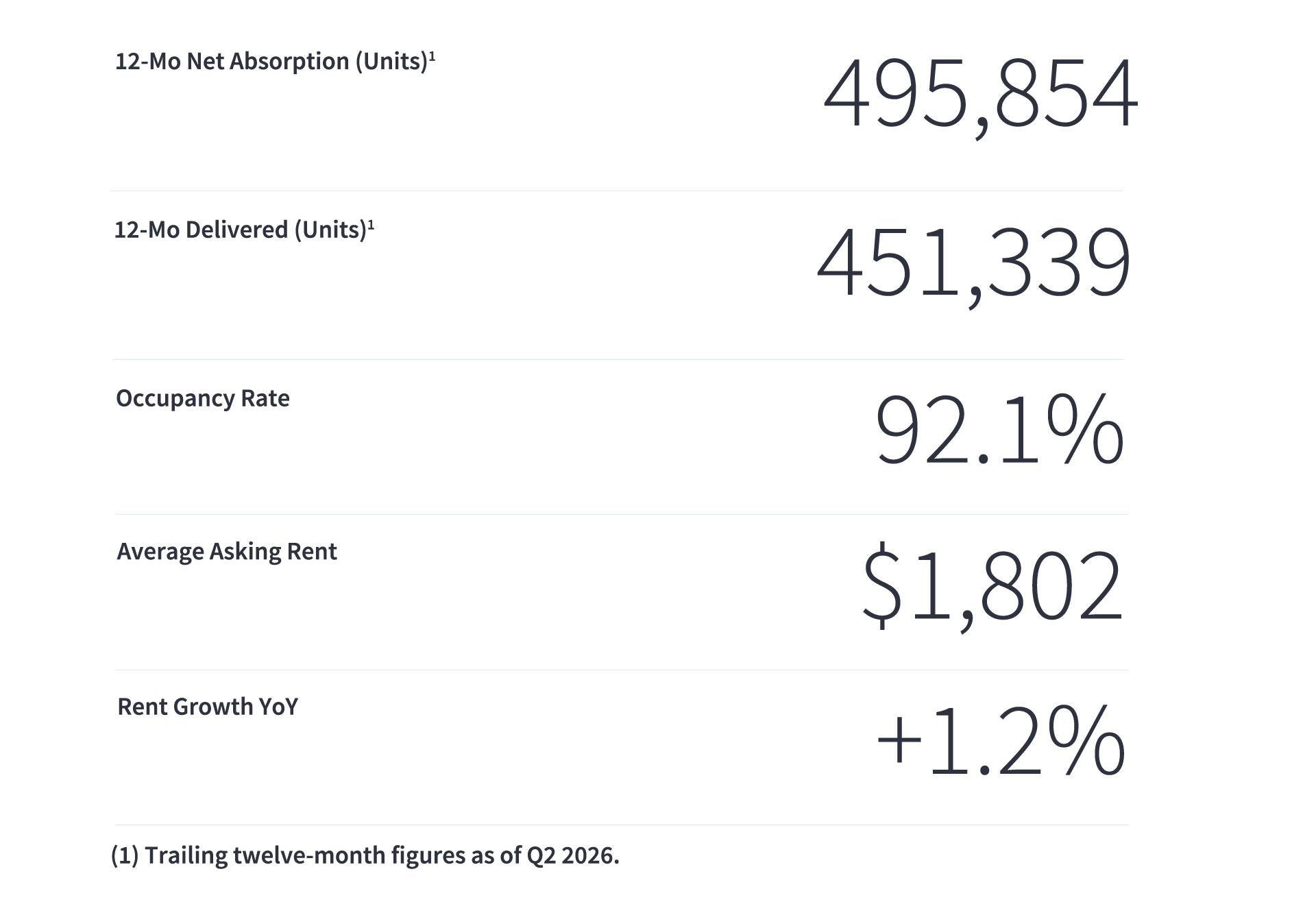
The inflection point we have anticipated for several quarters has arrived. Net absorption in the second quarter of 2026 reached approximately 168,000 units—up 17% year over year and the strongest quarterly performance since the third quarter of 2021—while net deliveries eased to roughly 118,000 units.1 On a trailing twelve-month basis, absorption of 495,854 units now exceeds deliveries of 451,339 units, the crossover we projected last quarter for the second half of 2026. National vacancy has declined 60 basis points from its fourth-quarter 2025 peak to 7.9%, and asking rent growth has recovered to 1.2% from a first-quarter low of 0.3%.1
The supply picture continues to improve faster than the broader market narrative suggests. Apartment starts totaled approximately 62,000 units in the second quarter, the lowest quarterly figure since 2012 and roughly 70% below peak-cycle levels. The national construction pipeline has contracted from nearly 1.2 million units at its 2023 peak to approximately 575,000 units—a decline of more than 50%—and 38 of the nation's 50 largest markets now report fewer units under construction than a year ago.1 Deliveries are projected to fall from 696,000 units in 2024 to roughly 415,000 in 2026 and 346,000 in 2027, setting up the most favorable supply environment in more than a decade.1
Our view that 2026 marks the early innings of a new cap rate compression cycle remains intact, though the timing of debt cost relief has extended further than we anticipated even one quarter ago. The Federal Reserve has held its policy rate unchanged through 2026, with several policymakers favoring an increase at the July meeting4 as headline PCE inflation reaccelerated to 3.7% and Treasury yields moved into the mid-4% range.1,3 We are therefore underwriting value creation that is earned through NOI growth and occupancy rebuild rather than granted by lower exit cap rates, and we treat rate relief as upside to that case rather than a requirement of it. The pricing backdrop supports that discipline: cap rates have stabilized near 5.0%–5.5% for institutional-quality assets and 5.75%–6.25% for the workforce-oriented product we favor, while CoStar's repeat-sale index shows values roughly 20% below the 2022 peak—a meaningful discount basis for capital deployed today.3